
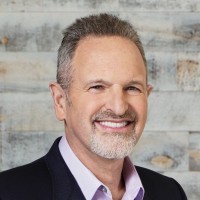
Rene Haas | CEO of Arm
Innovation and unconventional thinking
How should the Secretary of the U.S. Department of Education be selected?
Because the U.S. Secretary of Education has the potential to drive or influence nationwide K–12 student performance, the method of the Secretary’s selection—and conditional longevity—may be just as important as the individual selected.
This explainer site suggests using a Panel committed to becoming known for selecting Secretaries of Education whose subsequent performance demonstrates transformative gains in nationwide K–12 student outcomes, as verified by hard-number metrics.
The Panel’s Authority: To review this explainer site’s proposed process for selecting the Secretary of Education, click the U.S. Department of Education link, then scroll to the section titled, “In a Congressional remake of the DOE, should the Secretary of Education position be performance-based?” If a Secretary’s performance falls short, the Panel would not be passive; it would be proactive, engaged, and expected to take appropriate action, including at-will replacement of the Secretary, if necessary—a condition the Secretary would agree to upon accepting the position.
Potential Panel members could come from many backgrounds—and there should be no required discipline, credential, or traditional career path.
Similarly—perhaps even less intuitively—the most effective Secretaries of Education could come from outside traditional education.
As one example, in the 34.04 issue of Wired, the article “ARM’S RACE” by Lauren Goode profiles Rene Haas, CEO of Arm. Arm is a global technology leader whose chip architectures are licensed by companies including Apple, Tesla, NVIDIA, Microsoft, Amazon, Samsung, and Qualcomm.
Not that Mr. Haas would necessarily have any interest in either serving on the Panel or being considered for the Secretary of Education; rather, the point is that exceptional potential candidates abound. What each might contribute is a unique perspective shaped by experience with innovation, culture, leadership, and performance.
An example of transformational leadership emerging from an unexpected background: In the commercial sector, consider the Lou Gerstner turnaround of IBM. Before joining IBM, Gerstner was the CEO of Nabisco, a company known for cookies, crackers, and snacks. Despite having no computer industry background, he was recruited to lead IBM. He quickly assessed the situation, halted the company’s planned breakup, and went on to lead one of the most celebrated corporate turnarounds in modern business history.
Snippets from the Wired article:
Wired: Since you became the CEO, people say there’s been a big culture change [at ARM]. Do you agree?
Haas: The thing I’ve learned is that the CEO sets the tone for the company. My training, which develops who you are as a leader, was accelerated by moving to Silicon Valley 30 years ago—working with startups and then for NVIDIA. I was working for founders. At the time I couldn’t tell you, “Oh, working for founders, that’s the kind of environment I resonate with.” But looking back, that’s where my DNA was shaped and where I found the environment in which I thrive.
Wired: What kind of environment is that?
Haas: Taking risks, bold growth, fast markets, making mistakes, but being willing to take big bets. So when I took over here, I said, that’s the kind of culture I want.
Haas: There's never a bad time. There's never a good time
Haas is preparing to launch a bold new chip initiative. Major risks lie ahead, and the outcome is unknown—but so is the possibility of industry-changing success. As described in Wired, he works closely with SoftBank CEO Masayoshi Son (SoftBank owns 90% of Arm).
Haas’ point: when pursuing a major initiative, choosing the perfect time is impossible. External conditions continuously change and create new uncertainties. Thinking long term, as Haas puts it: “You’ve just got to do it.”
Haas: Longterm can be unpredictable. The Texas Instruments example
Haas: “My first job out of college was with Texas Instruments in 1984. It was a boom year for the semiconductor industry. But the early 1980s included one of the worst recessions ever. Then, in 1985, Reagan began his second term and reduced defense spending—which was a major part of TI’s business.
What was the lesson I learned? There’s never a good time to do anything. Seriously. There’s never a bad time. You’ve just got to do it.”
Haas: Phil Jackson—basketball coach
Wired: “You’re a big fan of the famed basketball coach Phil Jackson. Why?”
Haas: “What I love about Phil Jackson is that he took two great teams with a lot of talent and turned them into champions.”
(This explainer site: That observation brings to mind the DOE and nationwide K–12 student performance. The challenge may not be a lack of talent—but identifying leadership capable of helping convert potential into championship-level performance.)
A Panel that included perspectives from someone such as Rene Haas—or from someone with leadership attributes similar to Phil Jackson’s—might approach the selection of the U.S. Secretary of Education differently.
A Panel member should not be required to have any particular credential or professional background
As John F. Kennedy might have supported—based on the importance he placed on nationwide K–12 student performance—Congress could consider re-legislating the DOE and, within that legislation, establishing a process for selecting the U.S. Secretary of Education.
One possible mechanism would be a Panel.
Kennedy did not live to see the DOE launched in 1980, more than two decades after his death. But one could argue that he may have been disappointed that the DOE’s legislated mission did not expressly focus on K–12 student performance, or identify K–12 student performance as a standalone mission.
Moreover, if the DOE mission were redefined to play an unprecedented role in influencing nationwide K–12 student performance—click the U.S. Department of Education—success could depend substantially on selecting the right Secretary of Education. Yet responsibility for selecting the Secretary was left to an incoming U.S. President—who may already face overwhelming responsibilities and whose priorities may vary from one administration and political cycle to the next. (At stake: nationwide K–12 student performance.)
A time for Congress
Today, Congress could expedite a comprehensive review and rewrite of the Department of Education’s governing legislation—one that includes paramount Secretary of Education selection and performance parameters, as well as the potential value of a Panel. Such legislation could attract broad bipartisan support in Congress and might be viewed favorably by almost any President.
Key code 184