


JFK and K-12 student performance
Remember when there was no U.S. Department of Education, and before that, no National Assessment of Educational Progress (NAEP)?
When John F. Kennedy assumed the presidency, there were neither.
K–12 results in many states were in shambles. Even in higher-performing states, some schools lagged far behind when measured against their own standards. But there was no consistent yardstick to compare one state’s performance with another’s—or one school within a state to its counterpart elsewhere. NAEP did not yet exist, nor did the Department of Education.
It was clear that, taken as a whole, K–12 student performance was leaving much of the population behind—unable to compete with their peers socioeconomically or in quality of life, both during their school years and afterward—and the nation’s GDP was forfeiting trillions in lost opportunity.
Poorly performing K-12 states remained stuck at the bottom.
No—the notion that poorly performing states would learn from better-performing ones proved false. Even within the same state, whether overall high- or low-performing, struggling schools were not modeling their higher-performing counterparts.
Then, on January 20, 1961, John F. Kennedy took the oath of office as President.
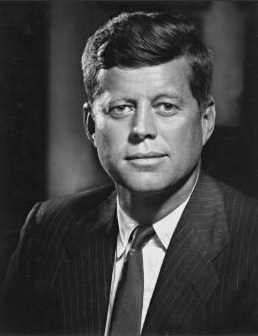
President Kennedy, “JFK,” believed that any large organization—including the states—needed a formally established central management “hub,” by whatever name. Such a hub would enable all states to rise toward the level of the most successful–and far beyond–through proper coordination and forward-looking innovation.
For example, fundamental day-one questions for a properly functioning hub might include: What is a high-performing school in a low-performing state doing differently? Conversely, what is a low-performing school in a high-performing state failing to do? And, yes, what can a high-performing school do to vastly improve?
For three years and ten months, Kennedy cajoled Congress to create a federal hub for K–12 student performance, but Congress continually denied him.
And then, he was assassinated.
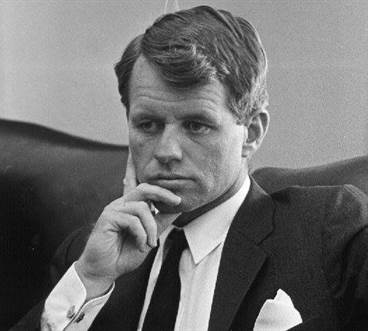
After President Kennedy’s assassination, his brother—Attorney General Robert “Bobby” Kennedy—carried forward JFK’s driving focus on creating a federally coordinated Hub to support K–12 education.
Bobby Kennedy successfully championed the Elementary and Secondary Education Act (ESEA), which was signed into law in 1965 by President Lyndon B. Johnson, who had assumed the presidency after serving as John F. Kennedy’s vice president.
He also continued to advocate for a central hub, focused squarely on improving K–12 student performance nationwide.
However, Bobby Kennedy was assassinated just four years and six months after his brother—thus ending the pressure on Congress to act.
Finally, seventeen years after President Kennedy’s death, a new Congress established a central management hub for K–12—but it proved to be a disaster. The U.S. Department of Education was created, but in name only; it was not formed in the mold of Kennedy’s K–12 ethic.
(This website uses the unofficial abbreviation “DOE” rather than the official “ED.”)
Signed into law by President Jimmy Carter, the newly created DOE—the name for the hub that emerged—was perfunctory. It was a hodgepodge, bearing no resemblance to JFK’s vision for K–12 student performance.
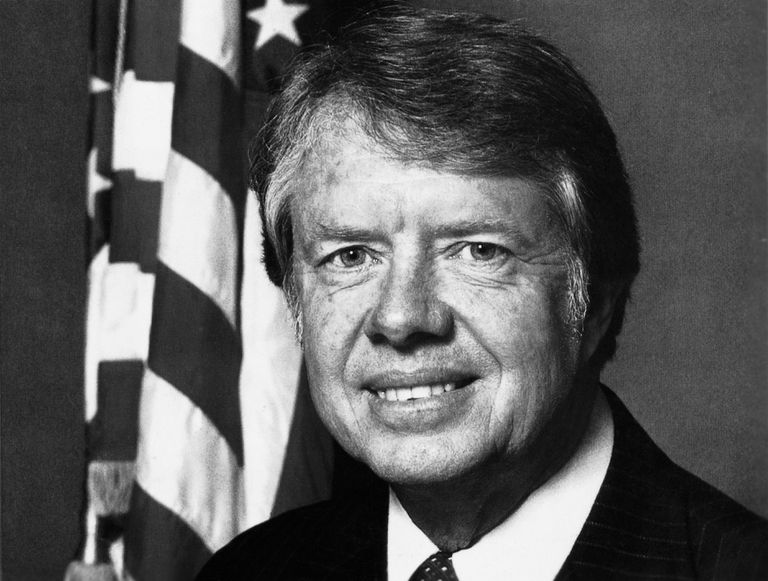
A crippling DOE mistake by President Carter: he saw the need for a central K–12 hub, yet missed the qualifier—the content of the legislation. In 1980, he signed the law creating the DOE—yet there was no fervent focus, or even a mention, of achieving a quantum leap in K-12 student performance. The Act carried no hard-number, metrics-driven mandate for K-12 results and no rigorous accountability for the Secretary of Education.
Instead, the DOE became a bucket—a central place for education programs previously housed in other agencies. Staffing for that bucket soon expanded beyond all reason. As it figuratively rusted through, it burst into a Niagara Falls of wasted taxpayer dollars.
Incoming Secretaries—rather than confronting the NAEP crisis—busied themselves with keeping the bucket full. (Remember, NAEP had already been in existence for a decade. All a Secretary had to do was look.)

DOE opportunity missed by President Reagan: By executive order, Reagan had the authority to do what the Carter DOE legislation had not—mandate a direct, sharp focus on K–12 student performance during his presidency—a step that could have been continued by future presidents or made permanent by Congress.
Instead, he called for termination, which Congress denied.
But why seek termination? Perhaps Reagan did not consider that the legislation signed by Carter could be changed—or that Kennedy’s vision was not a “bucket.” Perhaps he gave no thought to making the DOE proactive—one that would scout innovations not yet imagined, like the computer two decades later.
Neither Reagan nor Carter had John F. Kennedy’s K-12 student performance vision.
Bold leadership is needed to fix the DOE’s flaws
Change can be quick:
First, implement the simple reforms detailed on our U.S. Department of Education page. The President can enact them immediately by executive action—and congressional members can later come together to assess them and make them permanent.
Second, implement and test the change-agent innovation highlighted on this site—temporarily called the HSe4Metrics platform—to deliver a nationwide breakthrough in K–12 student performance. Congress can authorize and fund its Manhattan Project–style launch and testing—an investment with potential direct and indirect returns that could far exceed its cost in terms of national GDP alone.
Congress can then study the results and move to make the executive order permanent.
A bold new status quo
It is too late for a properly legislated DOE—or for HSe4Metrics-like empowerment—to reach the 128 million graduates, along with the tens of millions who never completed high school, who followed President Carter’s signing of the DOE legislation presented to him in 1980.
But the status quo can change. It is not too late for the next 128 million students—if the DOE’s foundational documents are rewritten and innovations such as the HSe4Metrics platform are embraced for due diligence and implementation.
If dismantled
A properly structured DOE is indispensable to catapulting K–12 student performance. Dismantling the current DOE, rather than reforming it, would leave a future Congress with no choice but to re-create it—though only after years, even decades, of forfeited opportunity.
Key code 182, 183, 189